

Media
23 Jul 2026
How Does Low Tire Pressure Affect Truck Tires?
Many drivers only notice a tire pressure issue when the TPMS warning light comes on or the tire appears visibly underinflated. However, even a slight drop below the recommended pressure can have a significant impact on tire performance, driving safety, and operating costs.
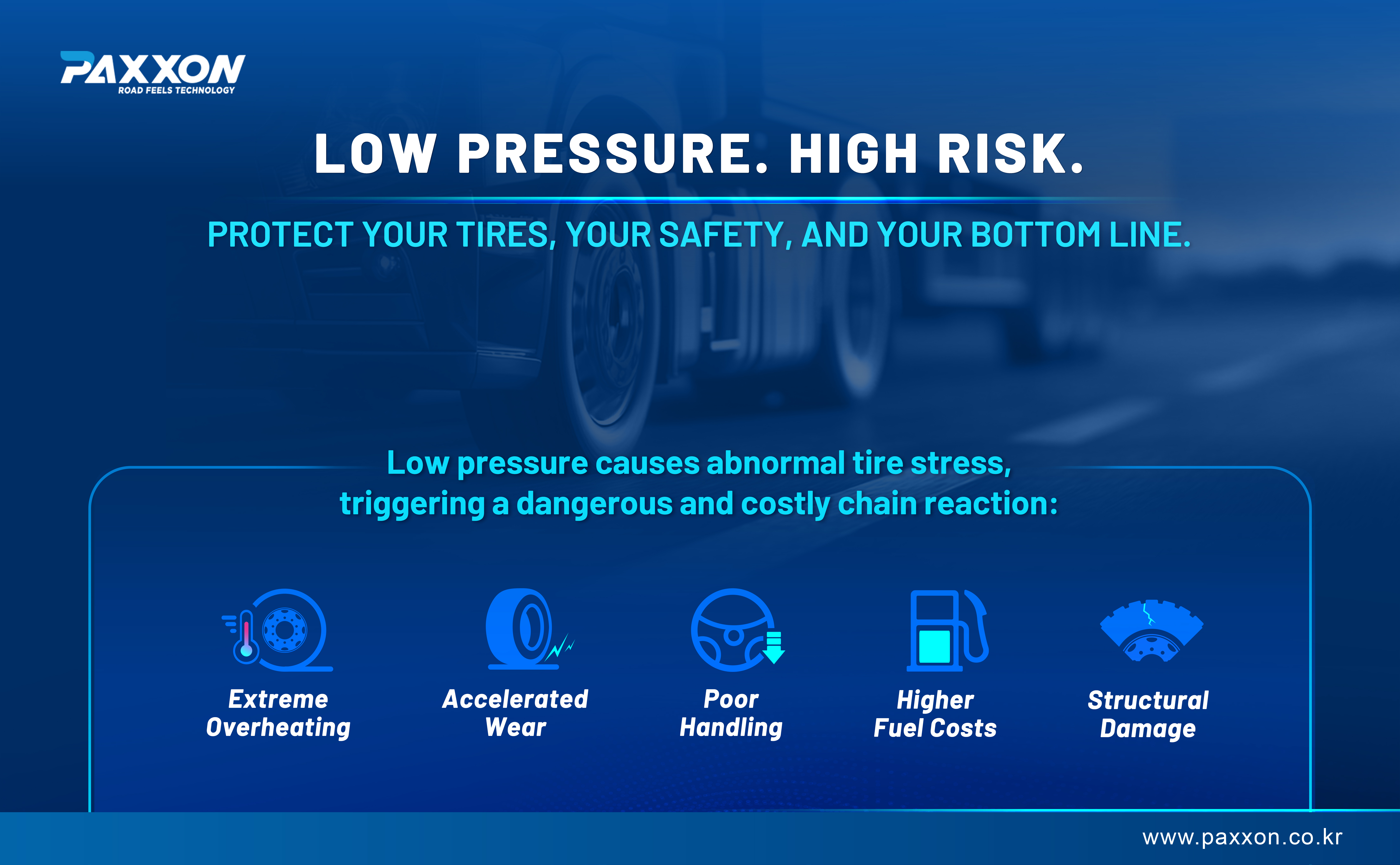
Five Risks of Driving with Low Tire Pressure
1.Excessive Heat Build-Up and Increased Blowout Risk:
During long-distance and high-speed operations, heat can build up rapidly inside an underinflated tire, potentially causing separation, crown separation, or shoulder separation. In severe cases, it may lead to a heat-related tire blowout.
2.Irregular Wear and Shortened Service Life:
Low tire pressure increases the load on the tire shoulders, causing uneven shoulder wear and reducing tire service life by 30%–50%.
3.Reduced Handling Performance:
Insufficient tire pressure weakens tire support and vehicle stability, creating higher safety risks, especially under heavy loads, on wet roads, or during emergency braking.
4.Increased Fuel Consumption:
Low tire pressure increases rolling resistance, leading to higher fuel consumption and increased operating costs per kilometer (€/km) for fleet operators over the long term.
5.Irreversible Internal Damage:
Prolonged driving with low tire pressure may damage the tire casing and steel belt package. Even after reinflation, such internal damage cannot be repaired and may eventually result in premature tire replacement.
Best Practices for Proper Tire Pressure Management:
Maintaining the correct tire pressure is essential for maximizing tire performance, improving road safety, and reducing Total Cost of Ownership (TCO). PAXXON recommends the following practices:
·Check tire pressure regularly, especially before long-distance trips.
·Avoid driving with underinflated tires, particularly under heavy loads, on mountainous routes, or during long-haul operations.
·Inspect tires immediately if shoulder wear, irregular wear, or tire deformation is observed, and restore the tire to the recommended pressure.
·Always inflate tires according to the vehicle manufacturer's recommended tire pressure.
A tire pressure check takes only a few minutes, but it can significantly reduce irregular wear, improve fuel efficiency, extend tire life, and enhance driving safety.
For fleet operators, establishing a routine tire pressure inspection program not only helps reduce tire-related operating costs but also improves fleet safety, reliability, and overall transport efficiency.
back